When Your Vehicle Gets Stuck: Why a Car Pullout Service Matters
Getting a vehicle unstuck is not always straightforward
Anyone who has driven in the UAE knows that the terrain can shift from smooth asphalt to soft sand, muddy patches, or awkward curbs in a matter of metres. A car can become stranded in a ditch, on a steep embankment, or in deep desert sand with little warning. In those moments, a standard tow truck often cannot help because the vehicle is not on a road. That is where a specialised car pullout service becomes essential. It is not the same as a simple tow. It involves careful assessment, the right equipment, and a methodical approach to extricate the vehicle without causing further damage.
I have seen drivers try to dig themselves out, only to bury the car deeper. I have watched friends attach ropes to trees or other vehicles, risking snapped cables and injuries. A professional pullout is safer, faster, and often cheaper than the damage a DIY attempt can cause. A car pullout service Car Recovery Dubai offers is designed for exactly these situations, and understanding when and why to call one can save you time, money, and frustration.
What makes a pullout different from a regular tow
A standard tow truck hooks up to a vehicle that is on a hard, level surface and can roll freely. If your car is stuck in sand up to its axles, or if it has slid into a roadside ditch, the tow truck itself cannot get close enough without getting stuck. A pullout service uses winches, heavy-duty straps, and sometimes specialised off-road recovery vehicles that can reach the stuck car without sinking in themselves. The operator assesses the angle, the ground conditions, the weight of the vehicle, and the best extraction path before attaching any cables.
There is a trade-off between speed and care. A quick yank might free the car but could tear the undercarriage, break a suspension component, or damage the transmission. A good operator takes their time, uses snatch blocks to change the direction of pull, and often digs around the tyres to reduce resistance before pulling. That is the difference between a hack job and a professional job. When you call a reputable provider like Car Recovery Dubai, you are paying for that judgment as much as for the equipment.
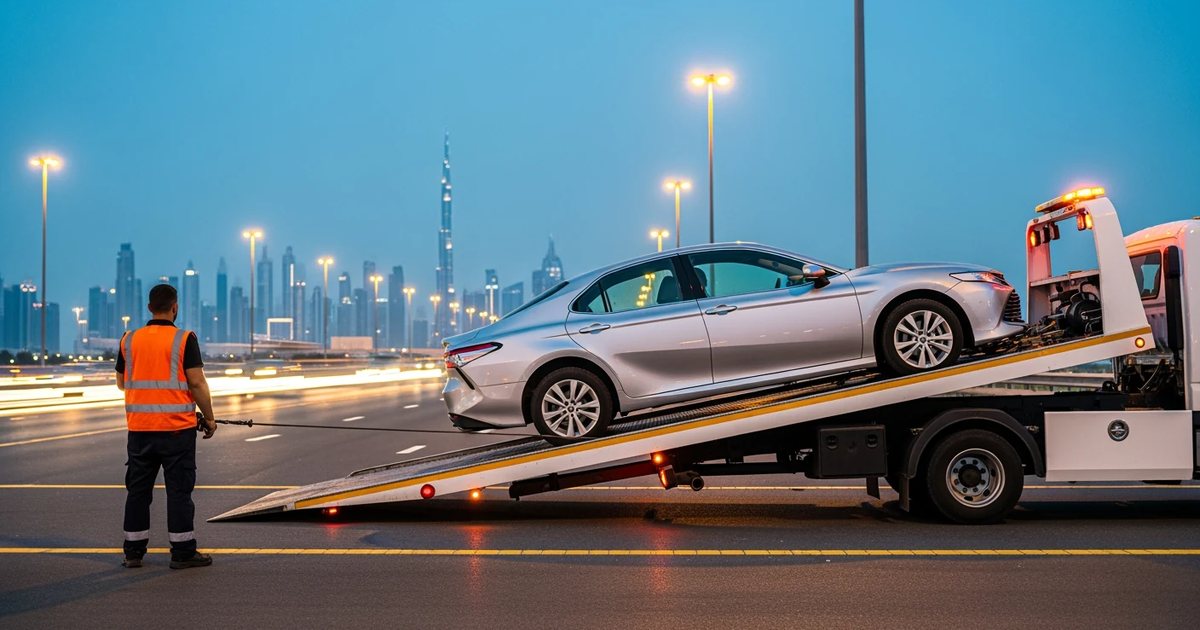
Common scenarios that need a pullout
Some situations come up again and again. Here are the most frequent ones I encounter in the field:
- Desert driving, Soft sand is the number one cause of stuck vehicles in the UAE. Even experienced drivers misjudge a patch or lose momentum on a dune. The car sinks rapidly, and the more you try to power out, the deeper it goes.
- Flooded areas or muddy worksites, After rain, or near construction zones, the ground turns to slick mud. A car can slide off a track and into a depression with no traction at all.
- Kerbs and steep verges, A misjudged turn can drop a wheel over a high kerb or into a drainage ditch. The car is balanced awkwardly and cannot simply be backed out.
- Accidents that leave the vehicle off-road, If a collision pushes the vehicle onto a soft shoulder or into a field, it often needs winching out before it can be towed.
- Heavy vehicles stuck in loading bays or soft ground, Trucks and buses have a lot of weight, and once they sink in, ordinary towing vehicles cannot handle them. Specialised recovery trucks are needed.
Each of these situations requires a different approach. A one-size-fits-all pullout can cause more harm than good. That is why a professional car pullout service Car Recovery Dubai provides is not just about pulling hard; it is about pulling smart.
Choosing the right equipment matters
Not all recovery vehicles are built the same. A small winch on the back of a standard tow truck might work for a car stuck in a shallow ditch, but for a vehicle buried to the chassis in desert sand, you need a truck with a powerful winch, a long cable, and the ability to anchor itself so it does not get pulled forward. Some operators use a second vehicle as an anchor, while others carry ground anchors that screw into the earth. The best teams carry a range of straps, chains, and shackles rated for different loads, and they inspect each piece before every use.
One thing I have learned is that the condition of the recovery point on your car matters. Many modern cars have designated tow points that are not obvious. A good operator knows where to attach the strap without damaging plastic trim or bending a chassis member. They also know when to use a soft strap instead of a chain to avoid scratching or denting the bodywork. These details might sound minor, but they separate a careful pullout from a damaging one.
What to do while you wait for help
If you find yourself stuck and have already called a service, there are a few things you can do to make the job easier. First, stay calm. Do not keep trying to drive out; every spin of the tyres digs the car deeper and makes the pull harder. Second, clear any loose items from the area around the wheels so the operator has a clear view. Third, if you have passengers, get them out of the car and to a safe spot away from the recovery zone. Cables can snap under tension, and a flying hook can cause serious injury. Finally, have your vehicle registration and insurance details ready. Some recovery services need to confirm your details before starting work.
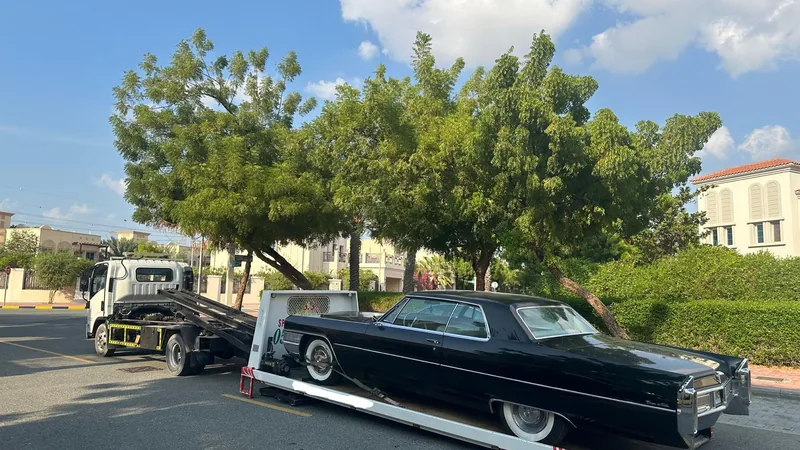
It also helps to describe your location as precisely as possible. A GPS pin or a landmark like a specific mosque or petrol station can save the recovery team time finding you. In the desert, a single dune looks like every other dune, so be specific about which track you took or how far from the main road you are.
When a pullout becomes a full recovery
Sometimes the situation is more complex than a simple pullout. If the vehicle has rolled onto its side, or if it is wedged between obstacles, the operator might need to stabilise it before winching. In extreme cases, the car might need to be lifted with a crane or air bags before it can be pulled free. That is a recovery operation, not just a pullout, and it requires additional equipment and planning. A good service will tell you honestly whether a straightforward pullout will work or whether a more involved recovery is needed.
There is also the question of damage. If the car has been stuck for a long time, or if it was driven hard while stuck, there could be damage to the gearbox, the differential, or the suspension. The pullout might free the car, but you should not assume it is safe to drive immediately. A responsible operator will point out visible damage and advise you to have the car inspected before you drive it at speed. This is a case where honesty beats politeness every time.
The value of experience in pullout work
I have seen inexperienced operators try to pull a car out from the wrong angle, only to flip it onto its side. I have seen cables fray and snap because they were used beyond their rated capacity. I have also seen a team of three people free a heavily loaded truck from deep sand in under twenty minutes because they knew exactly where to place the winch and how to use a snatch block to double their pulling power. That kind of efficiency comes from doing this work day in and day out, in all conditions, with all kinds of vehicles. A car pullout service Car Recovery Dubai delivers is backed by that kind of experience, and it makes a real difference in how smoothly the job goes.
The UAE is a place where driving off-road is a common weekend activity, and where sudden weather can turn a roadside into a trap. Knowing that a reliable pullout service is just a phone call away gives peace of mind. But the key is to call early, before you have exhausted yourself trying to dig or push. The sooner the professional team arrives, the less damage the vehicle is likely to suffer, and the lower the final bill will be.

A few final thoughts on preparation
If you plan to drive off-road or in areas where you might get stuck, carry a basic recovery kit: a strong tow strap, a shovel, and a set of traction boards or sand ladders. These can help you self-recover in mild situations, and they also help the recovery team if the car is not too deeply stuck. But never rely on a cheap strap from a hardware store. Recovery work puts enormous forces on the equipment, and a failure at the wrong moment can be dangerous. Invest in gear that is rated for your vehicle's weight.
And remember, the best recovery is the one you never need. Drive to the conditions, stay on marked tracks if you are not experienced, and avoid driving through standing water or deep sand unless you are properly equipped. But if the worst happens, a professional car pullout service is the right call every time.
Ends · CARPULLOUTSERVICECARFOCUS